Begin with the setting you already have
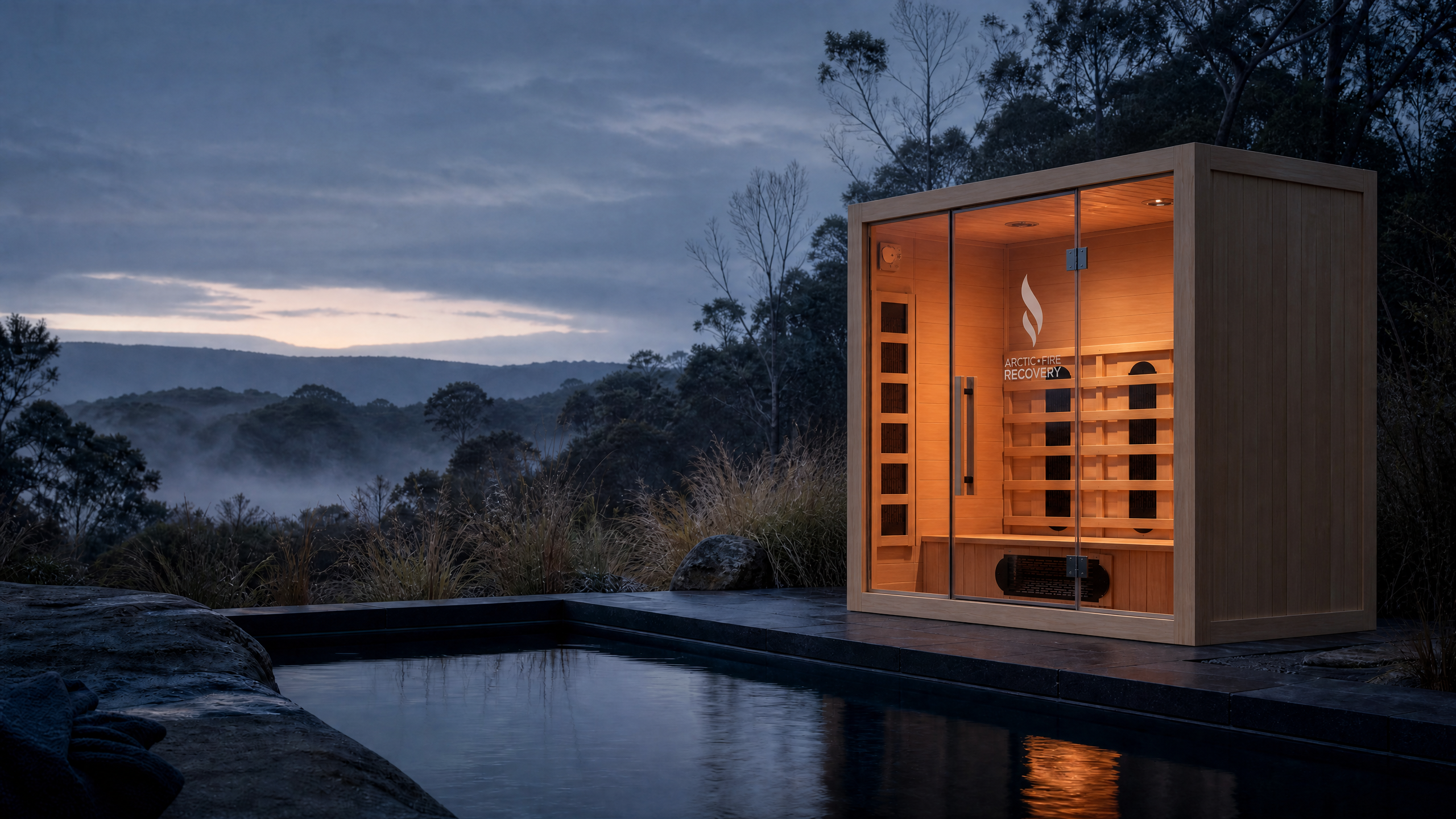
The clearest difference is often where the sauna will live. Infrared models are well suited to an indoor recovery room or a carefully planned enclosed area. They can turn an underused room into a dedicated ritual without requiring the experience to begin outdoors.
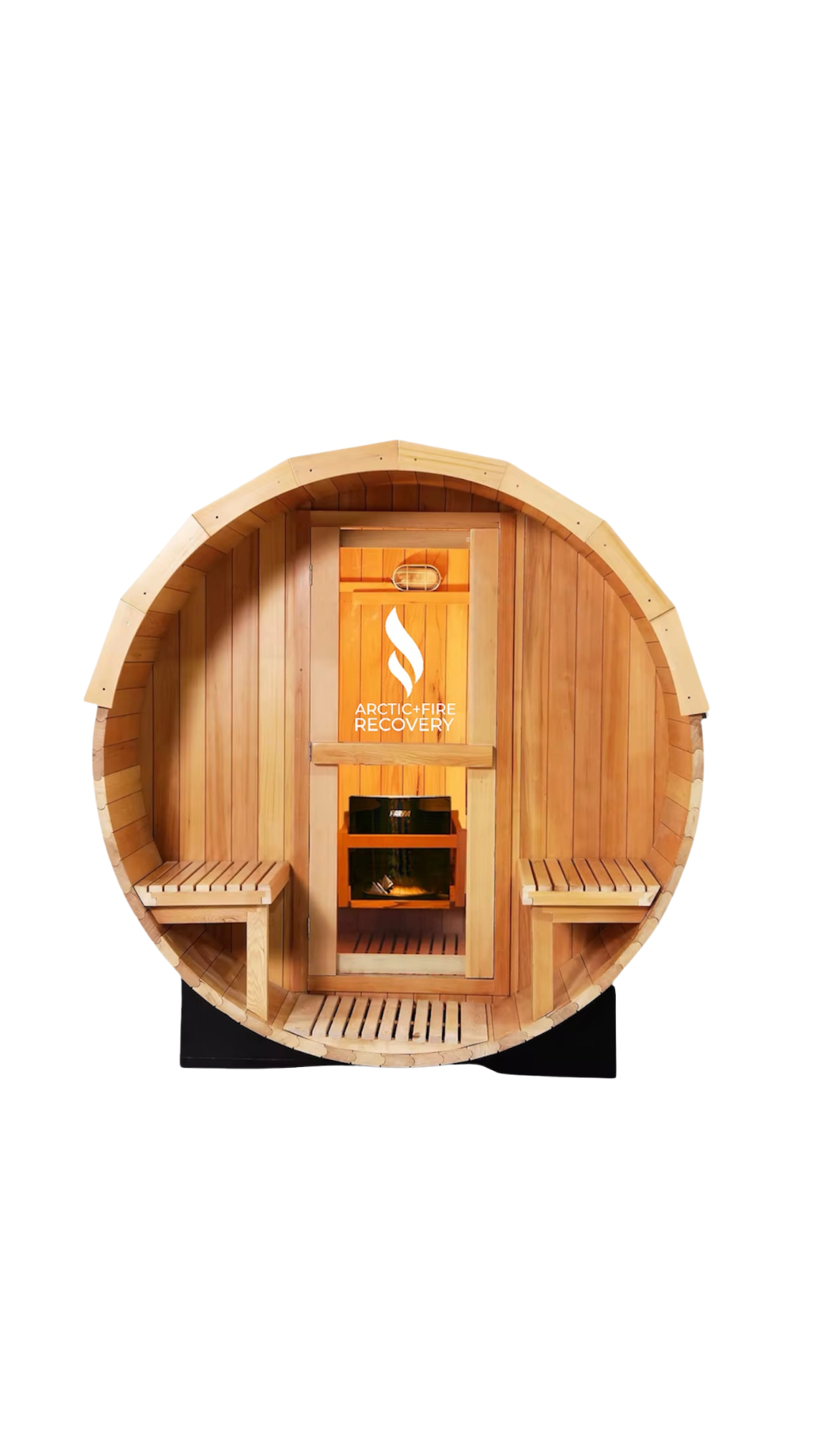
A traditional outdoor sauna belongs to a different kind of setting. It can create a distinct destination in the garden, near a deck or alongside a cold-plunge area. The approach through the outdoors, the view, the weather and the transition back inside all become part of the experience.
- Choose the format that suits the location you can prepare properly.
- Think about the route to the sauna in ordinary weather, not just ideal conditions.
- Allow enough surrounding space for delivery, access and future servicing.
Compare how the two formats create heat
An infrared sauna uses purpose-built infrared panels. In the Arctic Fire Recovery collection, the indoor infrared models are designed around Canadian Hemlock, tempered glass and considered panel arrangements. The three-person model also includes full-spectrum infrared heaters, Bluetooth and chromotherapy LED lighting.
A traditional outdoor sauna uses a dedicated sauna heater within an outdoor-rated timber barrel. Its experience is tied to the volume of the cabin, the warmth of the heater and the elemental setting around it. The exact product instructions should guide operation, clearances and installation planning for either option.
Compare capacity and the space each format asks for
A two-person infrared sauna can fit a compact room and still offer one person a generous individual ritual. A three-person infrared sauna adds more room for a shared household rhythm. In both cases, the cabin sits within an interior layout that needs suitable clearance, access and a practical approach to power and ventilation.
An outdoor barrel sauna creates a larger presence in the landscape. Its footprint is only one consideration: plan the base, surrounding circulation, weather exposure and delivery route as part of the decision. The available outdoor zone should feel like it is gaining a purposeful room, not losing a pathway.
Compare the daily ritual, not only the product
An indoor infrared sauna can make a warm session feel close at hand. This may suit a home where recovery needs to fit around family, work or a short window after training. The surrounding room can be arranged with towels, water and a place to sit so there is very little friction between deciding to use the sauna and stepping inside.
A traditional outdoor sauna can make the ritual feel more separate from the rest of the day. For some people, that threshold is exactly the appeal. A walk into the garden, the change in air and the outdoor setting can give a session a more deliberate sense of occasion.
Compare the installation plan before committing
Both formats need a site-specific plan. For an infrared sauna, confirm the room dimensions, delivery route, electrical requirements, ventilation and the clearances specified for the exact model. For a traditional outdoor sauna, add the base, weather exposure, external access and how the outdoor setting will be prepared.
Product documentation and qualified trades should determine the final technical plan. Share measured dimensions, photographs and any known constraints early. This turns a broad comparison into a decision that is practical for your own home.
- Confirm the exact model requirements before organising electrical or site work.
- Use appropriately licensed and qualified professionals for relevant installation work.
- Plan the delivery path as carefully as the final location.
Make the choice with a short, honest brief
If your brief begins with a spare room, a compact daily routine and a desire for a self-contained indoor space, infrared is likely the more natural starting point. If it begins with a garden, a deck or a desire to create a separate outdoor destination, a traditional barrel sauna may be the stronger fit.
There is no need to decide from a generic comparison chart. Start with the location, then compare the specific products that can work there. Arctic Fire Recovery can help you talk through the equipment, delivery approach and the practical details of your space.