Choose a location that supports the whole ritual
Start by mapping the moments around the plunge: approaching it, getting in, getting out, drying off and leaving the area. A practical position has a stable base, a clear pathway and enough surrounding space to move without feeling crowded. It should also suit how the location will be used in changing weather and at different times of day.
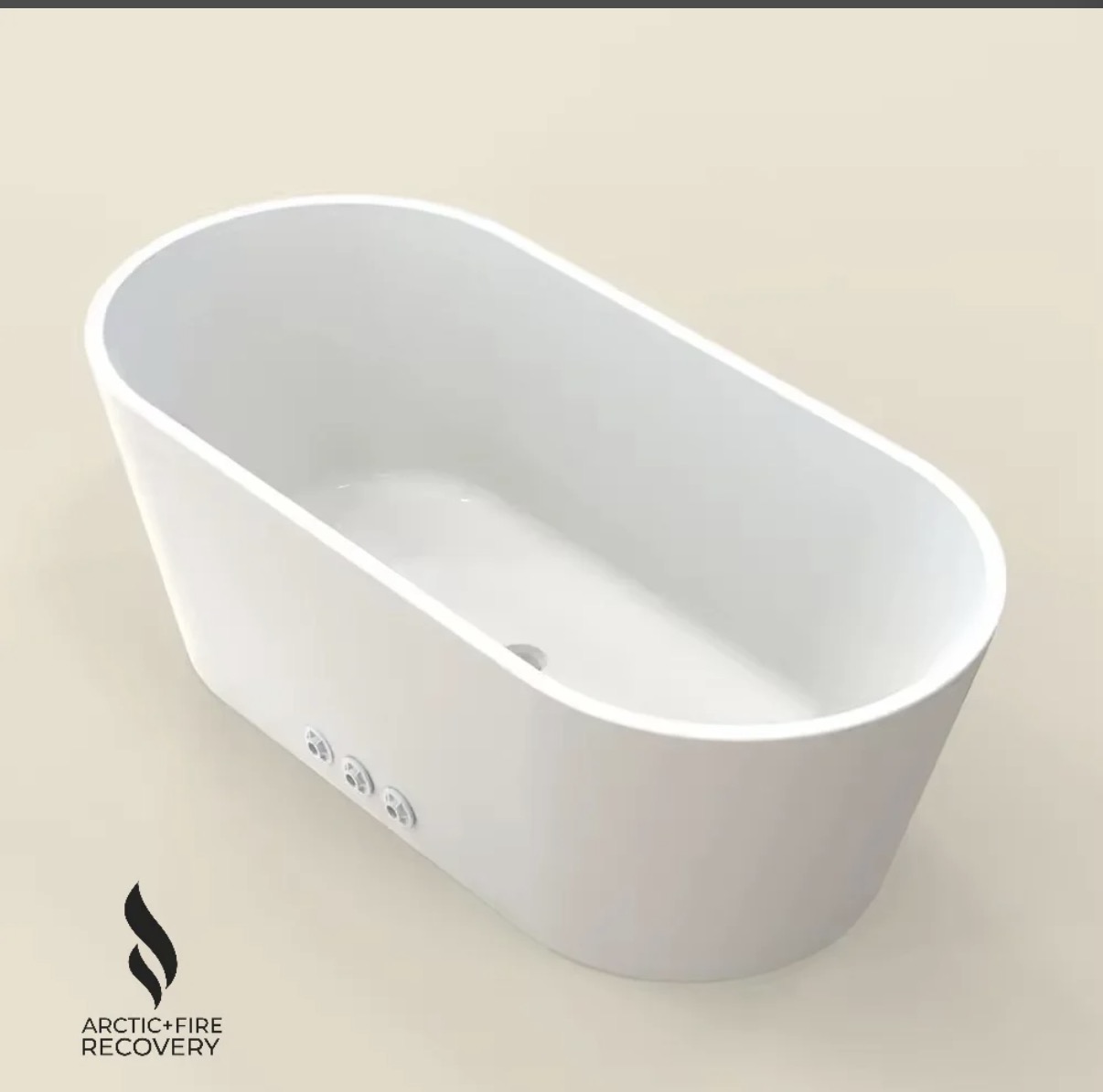
A round, freestanding plunge can create a strong focal point in a recovery corner or outdoor setting. Its best placement is rarely the very edge of the space. Leave visual and physical breathing room so the area still feels calm when towels, a mat or other small ritual elements are present.
- Confirm the supporting surface is appropriate for the exact unit and filled weight.
- Leave a clear, slip-conscious route to and from the plunge.
- Think about privacy, light and weather exposure in the context of your normal routine.
Give support equipment a deliberate place
A cold plunge setup may include cooling equipment or other supporting components. Those elements need an accessible, well-considered home of their own rather than being treated as an afterthought. Keep service access in mind so the setup can be maintained without rearranging the whole space.
The exact power, clearance, water and installation requirements depend on the particular unit and its supporting equipment. Confirm these conditions from the product documentation and with appropriate qualified trades before the final position is locked in.
Make care part of the buying decision
A recovery space is easier to use when care does not become a separate project. Before buying, ask how water care, cleaning and seasonal considerations will fit into the household. Decide where accessories will live and who will take responsibility for the basic routine.
A simple nearby storage point for towels and routine supplies can make a significant difference. So can a surface and drainage approach that does not leave you negotiating puddles or clutter after every session.
Plan the feel around the equipment
The most successful plunge areas do not rely on the vessel alone. They use light, material and circulation to make the space feel intentional. A dry surface underfoot, a place to pause and a clear view or sheltered outlook can turn a functional installation into an environment you want to return to.
Keep the supporting choices restrained. The goal is not to stage a showroom. It is to remove the small points of friction that discourage regular use.
Questions to settle before delivery
A good pre-delivery discussion should cover both the plunge and the site. Bring measurements, photographs and a short list of the practical constraints you have identified. This makes it easier to determine whether your first preferred position is genuinely the best position.
- Is the final surface appropriate for the exact product and its filled weight?
- How will the plunge and any support equipment be carried into position?
- Where will service access, power and water care be managed according to the product requirements?
- What will make the route safe and comfortable before and after a session?